
All AbMole products are for research use only, cannot be used for human consumption.
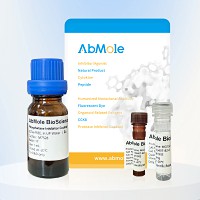
Species: Human
Expression system: E.coli
Purity: > 95% as determined by reduced SDS-PAGE
Endotoxin: less than 0.001 ng/ug (0.01 EU/ug) as determined by LAL
Storage and stability: Lyophilized proteins should be stored at < -20°C but can be stored at room temperature for up to 3 weeks. The recombinant protein solution can be stored at 4-7℃ for 2-7 days. The isometric solution of the recombinant sample was stable at < -20°C for 3 months.
Bioactivity: Fibroblast growth factor 4(FGF-4) is a heparin-binding member of the FGF family. Human FGF4 cDNA encodes 206 amino acids (AA), including 33 signal sequences and 173 mature proteins, with a FGF homologous domain containing a heparin binding region near the C-terminal. The homology of mature human FGF4 with mouse, rat, dog and bovine FGF4 was 91%, 82%, 94% and 91%, respectively. Human FGF-4 has been shown to have cross-species activity. The expression of FGF-4 and its receptors, FGF R1c, 2C, 3C and 4, are spatio-temporal regulated during embryonic development. Fgf-4 is thought to play a physiologically relevant role in the self-renewal of human embryonic stem cells. It promotes stem cell proliferation, but may also aid differentiation depending on environment and concentration, and is often included in embryonic stem cell culture medium in vitro. In vitro, FGF-4 is a mitotic source of fibroblasts and endothelial cells and has the potential of autocrine transformation.
| Solubility (25°C) | It is not recommended to reconstitute to a concentration less than 100 μg/ml. |
| Storage |
Powder -20°C 3 years ; 4°C 2 years In solvent -80°C 6 months ; -20°C 1 month |
| Related Cytokines and Growth Factors Products |
|---|
| Recombinant Human HGF (CHO-expressed)
Recombinant human Hepatocyte Growth Factor (rhHGF) , also known as hepatopoietin-A and scatter factor, is a pleiotropic mitogen belonging to the peptidase S1 family (plasminogen subfamily). It is produced by mesenchymal cells and acts on epithelial cells, endothelial cells and haemopoietic progenitor cells. |
| Recombinant Human RIPK3 Protein (E. coli, N-His)
RIPK3 is a kinase that controls necroptosis and apoptosis. In necroptosis, activated by TNF-α and ZBP1, RIPK3 phosphorylates MLKL, leading to membrane damage. Necroptosis is dependent on receptor-interacting protein kinase 3 (RIPK3), a protein shown to play an important role in experimental models of critical illness. RIPK3 promotes kidney tubular injury via mitochondrial dysfunction. The FAO-dependent RIPK3 mediates pathogenesis of acute lung injury. |
| Recombinant Influenza B Hemagglutinin/HA Protein (HEK293, C-His)
Recombinant Influenza B Hemagglutinin / HA Protein is a homotrimer that recognizes target cells in vertebrates and does so by binding to salivary acid-containing receptors on these cells. When it binds to the target cell, it causes the host inner membrane to fuse with the viral membrane, thereby facilitating the entry of the viral genome into the target cell. |
| Recombinant Human FGF-9 (E. coli)
Fibroblast Growth Factor-9 (FGF-9) is a heparin binding growth factor that belongs to the fibroblast growth factor (FGF) family. ED50 < 2.0 ng/ mL, determined by 3T3 cell proliferation assay, corresponding to > 5.0× 10⁵ units/mg. |
| Recombinant Human CXCL13/BCA-1 (E. coli)
CXCL13, also known as B-lymphocyte chemoattractant (BLC), is a CXC chemokine that is constitutively expressed in secondary lymphoid organs. Recombinant human CXCL13 is a single non-glycosylated polypeptide chain containing 87 amino acids and mature human BCA-1 shares 64 % amino acid sequence similarity with the murine protein and 23–34 % amino acid sequence identity with other known CXC chemokines. Determined by a chemotaxis bioassay using human B cells, the biological activity is in a concentration range of 1.0-10 ng/ml. |
All AbMole products are for research use only, cannot be used for human consumption or veterinary use. We do not provide products or services to individuals. Please comply with the intended use and do not use AbMole products for any other purpose.


Products are for research use only. Not for human use. We do not sell to patients.
© Copyright 2010-2026 AbMole BioScience. All Rights Reserved.
