
All AbMole products are for research use only, cannot be used for human consumption.
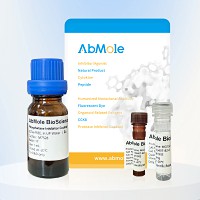
Expression host: HEK293 cells
Molecular weight: Human CD19 Protein contains 271 amino acids and has a predicted theoretical molecular weight of 31.8 kD
Molecular aliases: CD19, B4, CVID3, MGC12802
Purity: ≥95% Was analyzed by SDS-PAGE gel and HIGH performance liquid chromatography
Endotoxin: < 0.1EU/μg
Storage and stability: Freeze-dried samples can be stored at 4℃ for 24 months, dissolved liquid can be stored at -20℃ for 6-12 months, and avoid repeated freeze-thaw
Bioactivity: The B lymphocyte antigen CD19, also known as Cluster of.erention 19(CD19), is a one-way type I membrane protein containing two ig-Likec2-type (.globulin-like) domains. CD19 was expressed in follicular dendritic cells and B cells. In fact, it is present on B cells, from early recognized B line cells during development to B cell mother cells, but lost to plasma cells at maturity. It primarily acts as a B cell co-receptor with CD21 and CD81. Upon activation, the cytoplasmic tail of CD19 is phosphorylated, leading to the binding of SrC-family kinases and recruitment of Pi-3 kinase. As with T cells, some surface molecules form antigenic receptors that form complexes on B lymphocytes. Most B-cell specific CD19 phosphoglycoproteins are one of these molecules, the others are CD21 and CD81. These surface immunoglobulin (sIg) -associated molecules promote signal transduction. On living B cells, anti-immunoglobulin antibodies mimic exogenous antigens to bind CD19 to and internalize sIg. The opposite process has not been confirmed, suggesting that the formation of this receptor complex is antigen-induced. This combination of molecules has been confirmed by chemical studies. Mutations in CD19 are associated with severe immunodeficiency syndrome, which is characterized by reduced antibody production. CD19 has been shown to interact with CD81, CD82, complement receptor 2, and VAV2.
| Storage |
Powder -20°C 3 years ; 4°C 2 years In solvent -80°C 6 months ; -20°C 1 month |
[1] Ruihao Huang, et al. J Hematol Oncol. Recent advances in CAR-T cell engineering
[2] Carl H June, et al. N Engl J Med. Chimeric Antigen Receptor Therapy
[3] Michel Sadelain, et al. Nature. Therapeutic T cell engineering
[4] Kathrin Pieper, et al. J Allergy Clin Immunol. B-cell biology and development
| Related Cytokines and Growth Factors Products |
|---|
| Recombinant Human CD48/SLAMF2 (HEK293,C-Fc-6His)
Recombinant human CD48/SLAMF2 protein plays a vital role as an environmental sensor for regulating progenitor cell numbers and inhibiting tumor development. It is suggested that the anti-CD48 mAb has the potential to become an effective therapeutic mAb against multiple myeloma. |
| Recombinant Human IFNγ (CHO)
Human Interferon gamma (hIFN-γ) (CHO) is a dimerized soluble cytokine that is the only member of the type II class of interferons. |
| Recombinant Human EPO Protein (CHO)
Erythropoietin (EPO) is a glycoprotein hormone known primarily for its role in erythropoiesis, which is responsible for stimulating the proliferation and differentiation of erythroid progenitor cells. |
| Recombinant Human GM-CSF (HEK293, C-His)
Recombinant Human Granulocyte-Macrophage Colony Stimulating Factor is a hematopoietic growth factor and immune modulator. |
| Recombinant Human IL-1α Protein (E. coli)
Interleukin 1 (IL-1) is a peptide with a molecular mass of 17 kd and two isoforms, IL-1α and IL-1β. IL-1ɑ consists of 159 amino acids. Measured by its ability to induce interferon γ secretion from human natural killer lymphoma NK-92 cells, the ED50 of this effect is ≤100 ng/mL. |
All AbMole products are for research use only, cannot be used for human consumption or veterinary use. We do not provide products or services to individuals. Please comply with the intended use and do not use AbMole products for any other purpose.


Products are for research use only. Not for human use. We do not sell to patients.
© Copyright 2010-2026 AbMole BioScience. All Rights Reserved.
