
All AbMole products are for research use only, cannot be used for human consumption.
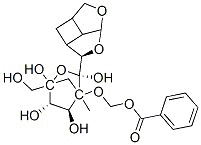
Paeoniflorin could activate PI3K/Akt signaling pathway to protect the PC12 cell injury induced by Aβ25-35.Paeoniflorin most likely contributes to the therapy for liver disease by exerting anti-inflammatory effects on HHSECs through blocking IL-8 secretion via downregulation of ERK1/2 and Akt.PF alleviates psoriatic skin lesions by inhibiting inflammation, which provides new insights into the immunomodulatory effect of PF in psoriasis treatment.Paeoniflorin pretreatment protects mice against Con A-induced liver injury via inhibition of several inflammatory mediators and, at least in part, by suppressing CD4(+), CD8(+) and NKT cell infiltration in liver. The beneficial effect of paeoniflorin may be related to the downregulation of TLR4 expression and the inhibition of NF-κB activation.Paeoniflorin alleviates liver fibrosis by inhibiting HIF-1α expression partly through mTOR pathway and paeoniflorin may be a potential therapeutic agent for liver fibrosis.
| Cell Experiment | |
|---|---|
| Cell lines | PC12 cells |
| Preparation method | Cell Viability Assessment Cell viability was measured using a quantitative colori-metric assay with 3-(4,5-dimethylthiazol-2-yl)-2,5-diphe-nyl tetrazolium bromide (MTT) as reported previously. Briefly, cells were seeded into collagen I-coated 96-well plates at a density of 1*104 per well. At the completion of the 24-h treatment, 10 μL MTT solution (5 mg/mL) was added. Following incubation for 4 h at 37 ℃, 100 μL dimethyl sulfoxide (DMSO) was used to dissolve crystals. The absorbance was measured using a microplate reader and cell viability was expressed as a percentage of control value. |
| Concentrations | 0, 25, 50, 100, 200 and 400 μM |
| Incubation time | 24 h |
| Animal Experiment | |
|---|---|
| Animal models | Adult male Sprague-Dawley rats |
| Formulation | PBS, pH 7.5, 0.1 M at a concentration of 200 μg/μL |
| Dosages | 15 mg/kg and 30 mg/kg for 20 consecutive days |
| Administration | i.p. |
| Molecular Weight | 480.46 |
| Formula | C23H28O11 |
| CAS Number | 23180-57-6 |
| Form | Solid |
| Solubility (25°C) | Water > 80 mg/mL DMSO > 60 mg/mL |
| Storage | -20°C, dry, sealed |
| Related HIF Products |
|---|
| FG-4592 (Roxadustat)
FG-4592 (Roxadustat; ASP1517) is a novel Hypoxia Inducible Factor Prolyl Hydroxylase inhibitor. |
| 2-Methoxyestradiol
2-methoxyestradiol (2-ME2), an endogenous metabolite of 17β -estradiol (E2) with oral activity, is an apoptosis inducer and angiogenesis inhibitor with effective antitumor activity. Methoxyestradiol can also destabilize microtubules. Methoxyestradiol is a potent inhibitor of superoxide dismutase (SOD) and reactive oxygen species (ROS) that can induce autophagy in transformed cell line HEK293, cancer cell line U87 and HeLa. |
| DMOG
DMOG (Dimethyloxaloyl glycine) is an antagonist of α-ketoglutarate cofactor and a cell permeable and competitive inhibitor of HIF-PH, which results in HIF-1α stabilisation and accmulation in vitro and in vivo. DMOG acts as a pro-angiogenic agent and plays a protective role in experimental model of colitis and diarrhoea via HIF-1 related signal. DMOG induces cell autophagy. |
| IOX2
IOX2 is a potent inhibitor of HIF-1α prolyl hydroxylase-2 (PHD2) with IC50 of 21 nM, >100-fold selectivity over JMJD2A, JMJD2C, JMJD2E, JMJD3, or the 2OG oxygenase FIH. |
| Hydralazine hydrochloride
Hydralazine hydrochloride is a hydrochloride salt of hydralazine (Apresoline) that is a direct-acting smooth muscle relaxant with an IC50 of 1.9 mM. |
All AbMole products are for research use only, cannot be used for human consumption or veterinary use. We do not provide products or services to individuals. Please comply with the intended use and do not use AbMole products for any other purpose.


Products are for research use only. Not for human use. We do not sell to patients.
© Copyright 2010-2026 AbMole BioScience. All Rights Reserved.
