
All AbMole products are for research use only, cannot be used for human consumption.
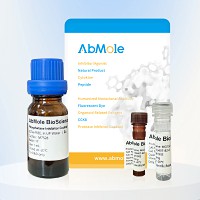
In vitro: Nivolumab binds PD-1 with high affinity (KD 2.6 nmol/l by Scatchard analysis to polyclonally activated human T cells) and blocks its interactions with both B7-H1 and B7-DC. It effectively inhibits the interaction between PD-1 and its ligands. In vitro assays demonstrated the ability of nivolumab to potently enhance T-cell responses and cytokine production in the mixed lymphocyte reaction and superantigen or cytomegalovirus stimulation assays. Nivolumab inhibits the interaction between PD-1 and its ligands, PD-L1 and PD-L2, with IC50 values of 2.52 and 2.59 nmol/L, respectively, as shown by surface plasmon resonance. In a study using FACS to evaluate ligand binding to PD-1 expressed on CHO cells, the IC50 values for nivolumab-mediated inhibition of PD-1 binding to PD-L1 or PD-L2 were similar (1.04 and 0.97 nmol/L, respectively). Nivolumab binds specifically to PD-1 and not to other immunoglobulin superfamily proteins, such as CD28, CTLA-4, ICOS, and BTLA. Nivolumab can, at very low concentrations (∼1.5 ng/mL), enhance T-cell reactivity in the presence of a T-cell receptor stimulus. However, nivolumab had no stimulatory effect in the absence of antigen or T-cell receptor stimulus. Specifically, there was no significant release of inflammatory cytokines, including IFNγ, TNFα, IL-2, IL-4, IL-6, or IL-10, from unstimulated whole blood after coincubation with nivolumab. Nivolumab does not cause nonspecific lymphocyte activation.
In vivo: Nivolumab was well tolerated, dose-limiting toxicities (DLTs) were not reached and the maximum tolerable dose (MTD) was not defined in patients with advanced stage solid tumors. The measured half-life of nivolumab was 12-20 days, the pharmacodynamic effects of PD-1 receptor occupancy was even more prolonged at 85 days, indicating the biological durability of this high-affinity mAb. In monkeys, serum nivolumab has a relatively slow clearance with limited extra vascular distribution, as demonstrated by a Vss value consistent with plasma volume. Mean apparent terminal elimination half-life estimates for males and females at 1 mg/kg were similar (124 and 139 hours, respectively), and the mean half-life estimate for males at 10 mg/kg was 261 hours. Although nivolumab seems to lack toxicity in monkeys, toxicities have been observed in human clinical trials. In a phase I trial, nivolumab had a favorable safety profile. Adverse events were generally similar to those observed with ipilimumab, although with lower incidence and of less severity, and comprised gastrointestinal, endocrine, and skin toxicities, and pulmonary inflammation. Interestingly, pneumonitis has been observed in PD-1-deficient mice bred onto the MRL genetic background, but not in PD-1-deficient mice with other genetic backgrounds.

Mol Cell Probes. 2023 Sep 28;72:101925.
CD3ζ as a novel predictive biomarker of PD-1 inhibitor resistance in melanoma
Nivolumab purchased from AbMole
PeerJ. 2023 Apr 19;11:e15172.
Sema4D silencing increases the sensitivity of nivolumab to B16-F10 resistant melanoma via inhibiting the PI3K/AKT signaling pathway
Nivolumab purchased from AbMole
| Cell Experiment | |
|---|---|
| Cell lines | PBMCs |
| Preparation method | In a cytomegalovirus (CMV)-restimulation assay, 2 × 10^5 PBMCs from a CMV-positive donor (Astarte) were stimulated using lysate of CMV-infected cells (Astarte), with serial dilutions of nivolumab added at the initiation of the assay. After 4 days, supernatants were assayed for IFNγ. |
| Concentrations | 0-10 μM |
| Incubation time | 4 days |
| Animal Experiment | |
|---|---|
| Animal models | Cynomolgus monkeys (Macaca fascicularis) |
| Formulation | Saline |
| Dosages | 3 mg/kg or 10 mg/kg |
| Administration | i.v. |
| CAS Number | 946414-94-4 |
| Storage | Store at -20°C or -70°C. Avoid multiple freeze-thaws. |
[5] Boning Liu, et al. MAbs. Acid-induced aggregation propensity of nivolumab is dependent on the Fc
| Related PD-1/PD-L1 Products |
|---|
| Avelumab (MSB0010718C)
Avelumab is a whole monoclonal antibody of isotype IgG1 that binds to the programmed death-ligand 1 (PD-L1) and therefore inhibits binding to its receptor programmed cell death 1 (PD-1). Avelumab recognizes murine PD-L1 |
| Panaxadiol
Panaxadiol exists in ginseng root and has neuroprotective and anti-tumor functions. Panaxadiol inhibits the expression of programmed cell death ligand-1 (PD-L1) and tumor proliferation. |
| Fraxinellone
Fraxinellone was isolated from the root bark of the brassica family Dictamnus dasycarpus. Fraxinellone is a PD-L1 inhibitor that inhibits HIF-1α synthesis without affecting HIF-1α degradation. Fraxinellone has potential for cancer immunity by targeting PD-L1. |
| BMS202
Bms-202 is an effective non-peptide PD-1/PD-L complex inhibitor with IC50 of 18 nM and KD of 8 μM. Bms-202 directly binds to PD-L1 and blocks the human PD-1/PD-L interaction. Bms-202 has antitumor activity. |
| Sulfamethoxypyridazine
Sulfamethoxypyridazine is a long-acting sulfonamide for treatment of Dermatitis herpetiformis. |
All AbMole products are for research use only, cannot be used for human consumption or veterinary use. We do not provide products or services to individuals. Please comply with the intended use and do not use AbMole products for any other purpose.


Products are for research use only. Not for human use. We do not sell to patients.
© Copyright 2010-2026 AbMole BioScience. All Rights Reserved.
