
All AbMole products are for research use only, cannot be used for human consumption.
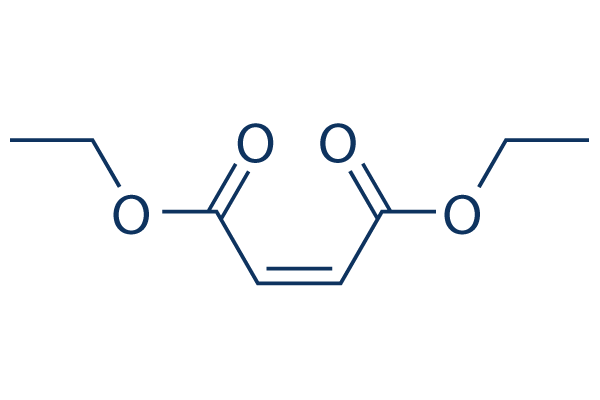
In vitro: DEM induces upregulation of GSH(L-c-glutamyl-L-cysteinyl-glycine) metabolism, and the downregulation of pathways of cancer, chemokine signaling, cytokine-cytokine receptor, and focal adhesion in transformed cells. DEM appears to modify microenvironment of transformed cells thereby restraining tumor cell growth. DEM is cytotoxic to the transformed cells in a concentration dependent manner. DEM at 0.25 mM decreases cell viability to 75%. The co-exposure of cells to DEM+GSHe inhibits DEM induced cytotoxicity. DEM exposure increases the ROS generation by multiple orders of magnitude in transformed cells. This is evident from the dose and time dependent increase in fluorescence intensity of CMH2DCFDA. Moreover, DEM activates MAPK pathway and DEM induced activation of ERK is found to be due to phosphorylation at Thr 202/204.
In vivo: Sperm motility and epididymal sperm count are significantly reduced in the DEM treated animals. Fertility status is also affected by DEM exposure as is evident from the percent fertility and the litter size. consequences of the oxidative stress produced by the DEM induces glutathione depletion, on the reproductive ability of male mice and modulation of the various components of the antioxidant defense system at the transcriptional level.

J Agric Food Chem. 2023 Dec 13;71(49):19465-19474.
CYP4CL2 Confers Metabolic Resistance to Pyridaben in the Citrus Pest Mite Panonychus citri
Diethylmaleate purchased from AbMole
| Cell Experiment | |
|---|---|
| Cell lines | Transformed cells (tC3H10T1/2 and tBALB/c) |
| Preparation method | A stock solution of DEM is prepared in 100% DMSO and diluted in DMEM to achieve the desired concentration with less than 0.1% DMSO in the culture wells. Briefly, cells are seeded (1 ×10⁴ cells/well) in 96-well plates and allowed to adhere overnight. Subsequently, these cells are exposed to DEM at various test concentrations (0.05-1 mM) or co-exposed to equimolar (0.25 mM) DEM+GSHe for 24 h. Cell viability is determined by recording the OD at 570 nm in an Elisa microplate reader. |
| Concentrations | Various test concentrations (0.05-1 mM) |
| Incubation time | 24 h |
| Animal Experiment | |
|---|---|
| Animal models | Sprague-Dawley rats |
| Formulation | corn oil |
| Dosages | A range of doses up to a maximum of 6mmol/kg |
| Administration | i.p. |
| Molecular Weight | 172.18 |
| Formula | C8H12O4 |
| CAS Number | 141-05-9 |
| Form | Liquid |
| Solubility (25°C) | DMSO 90 mg/mL Soluble in Ethanol |
| Storage |
Powder -20°C 3 years ; 4°C 2 years In solvent -80°C 6 months ; -20°C 1 month |
| Related NF-κB Products |
|---|
| QNZ
QNZ is an inhibitor of NF-κB activation with IC50 of 11 nM. QNZ (EVP4593) shows strong inhibitory effects on NF-κB transcriptional activation and TNF-α production with IC50s of 11 and 7 nM, respectively. QNZ (EVP4593) is a neuroprotective inhibitor of SOC channel. |
| Caffeic Acid Phenethyl Ester
Caffeic acid phenethyl ester is a potent and specific inhibitor of NF-κB activation, and also displays antioxidant, immunomodulatory and antiinflammatory activities. |
| Cepharanthine
Cepharanthine is a biscoclaurine alkaloid inhibiting tumor necrosis factor (TNF)-α-mediated NFκB stimulation, plasma membrane lipid peroxidation and platelet aggregation and suppressing cytokine production. |
| JSH-23
Jsh-23 is a NF-κB inhibitor, inhibited NF-κB transcriptional activity in lipopolysaccharid-stimulated macrophages RAW 264.7 with IC50 of 7.1 μM. Jsh-23 inhibited the nuclear translocation of NF-κB P65 without affecting the degradation of IκBα. |
| Methylthiouracil
Methylthiouracil is an anti-thyroid agent. Methylthiouracil inhibits TNF-α and IL-6 production and NF-κB and ERK1/2 activation. |
All AbMole products are for research use only, cannot be used for human consumption or veterinary use. We do not provide products or services to individuals. Please comply with the intended use and do not use AbMole products for any other purpose.


Products are for research use only. Not for human use. We do not sell to patients.
© Copyright 2010-2026 AbMole BioScience. All Rights Reserved.
