
All AbMole products are for research use only, cannot be used for human consumption.
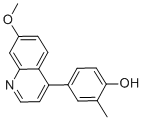
CU-CPT-9a is a potent TLR8 antagonist with IC50 of 0.5 nM, which that suppresses TLR8-mediated proinflammatory signaling in various cell lines and human primary cells. The expression levels of TRIF and IRF3 do not show significant change in THP-1 cells upon treatment of R848, nor do they change with the treatment of CU-CPT-9a. CU-CPT8m and CU-CPT-9a both significantly suppress the TNF-α level in a dose-dependent manner, which is in agreement with previous reports of TLR8 involvement in these autoimmune diseases.
| Molecular Weight | 265.31 |
| Formula | C17H15NO2 |
| CAS Number | 2165340-32-7 |
| Solubility (25°C) | DMSO ≥ 90 mg/mL |
| Storage |
Powder -20°C 3 years ; 4°C 2 years In solvent -80°C 6 months ; -20°C 1 month |
| Related TLR Products |
|---|
| Vesatolimod (GS-9620)
Vesatolimod (GS-9620) is an effective, selective, oral toll-like receptor 7 (TLR7) agonist with an EC50 value of 291 nM. |
| Atractylenolide I
Atractylenolide I is a sesquiterpene obtained from the roots of Atractylenolide. Atractylenolide I has neuroprotective, anti-allergic, anti-inflammatory and anticancer activities. Atractylenolide I is an antagonist of TLR4 and can also reduce the phosphorylation of JAK2 and STAT3 in A375 cells. |
| Schaftoside
Schaftoside is a flavonoid found in a variety of Chinese herbs such as Eleusine indica. Schaftoside inhibited TLR4 and Myd88 expression. Schaftoside also reduced Drp1 expression and phosphorylation, and reduced mitochondrial division. |
| Procyanidin-B1
Procyanidin B1 is a polyphenolic flavonoid that exists in common fruits and can bind to TLR4/MD-2 complex, showing anti-inflammatory activity. |
| Polygalasaponin-F
Polygalasaponin F is an oleanane type triterpenoid saponin extracted from Polygala Japonica, which can reduce the release of inflammatory cytokine tumor necrosis factor α (TNFa). Polygalasaponin F reduces the secretion of neuroinflammatory cytokines by regulating the TLR4-PI3K/ Akt-NF-KB signaling pathway. |
All AbMole products are for research use only, cannot be used for human consumption or veterinary use. We do not provide products or services to individuals. Please comply with the intended use and do not use AbMole products for any other purpose.


Products are for research use only. Not for human use. We do not sell to patients.
© Copyright 2010-2026 AbMole BioScience. All Rights Reserved.
