
All AbMole products are for research use only, cannot be used for human consumption.
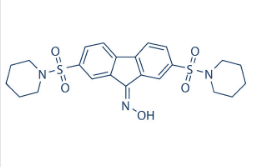
CIL56 (CA3) is a potent and selective ferroptosis inducer, it has potent inhibitory effects on YAP1/Tead transcriptional activity and primarily targets YAP1 high and therapy-resistant esophageal adenocarcinoma cells endowed with CSC properties.
In vitro: CIL56 (CA3) strongly inhibits esophageal adenocarcinoma cell growth in vitro. CIL56 (CA3) can effectively suppress tumor cell proliferation, induce apoptosis, reduce tumor sphere formation, and the population of ALDH1+ cells. CIL56 (CA3) specially inhibits Tead/YAP1 transcriptional activity but shows no inhibitory activity on other transcriptional factors-Super-TOP/Wnt, CBF1/Notch, and AP-1 after cotransfection of their respective individual promoter luciferases in 293T cells. CIL56 (CA3) preferentially inhibits CSC properties enriched in radiation-resistant esophageal adenocarcinoma cells.
In vivo: CIL56 (CA3) exerts strong antitumor activity in xenograft model with no apparent toxicity.
| Cell Experiment | |
|---|---|
| Cell lines | SKGT-4 and JHESO cells |
| Preparation method | SKGT-4 and JHESO cells are seeded onto 6-well plates (1 × 10⁵/well) in DMEM and cultured for 24 hours to allow for cell attachment. The cells are then treated with 0.1% DMSO (control) or CA3 at different doses as indicated for 48 hours. Next, the cells are harvested, fixed with methanol, washed, treated with RNase A, and stained for DNA with propidium iodide, and their DNA histograms and cell-cycle phase distributions are analyzed using flow cytometry. |
| Concentrations | 0.5 and 1 μmol/L |
| Incubation time | 48 hours |
| Animal Experiment | |
|---|---|
| Animal models | |
| Formulation | |
| Dosages | |
| Administration | |
| Molecular Weight | 489.61 |
| Formula | C23H27N3O5S2 |
| CAS Number | 300802-28-2 |
| Solubility (25°C) | DMSO 40 mg/mL (May need ultrasonic) |
| Storage |
Powder -20°C 3 years ; 4°C 2 years In solvent -80°C 6 months ; -20°C 1 month |
[2] Lu L, et al. Neuron. Topography of Place Maps along the CA3-to-CA2 Axis of the Hippocampus.
| Related Ferroptosis Products |
|---|
| Sulfasalazine
Sulfasalazine is a sulfonamide agent derived from Mesalazine. Sulfasalazine has xC-system inhibitory activity associated with iron death and is primarily used as an anti-inflammatory agent. Sulfasalazine can suppress NF-κB activity. Sulfasalazine is a type 1 ferroptosis inducer. |
| Deferiprone
Deferiprone is the only orally active iron-chelating agent with an affinity for ferric ion (iron III),binds with ferric ions to form neutral 3:1 (deferiprone:iron) complexes that are stable over a wide range of pH values. |
| Erastin
Erastin is a ferroptosis activator by acting on mitochondrial VDAC, exhibiting selectivity for tumor cells bearing oncogenic RAS. *The compound is unstable in solutions, freshly prepared is recommended |
| Ferrostatin-1
Ferrostatin-1 (Fer-1) is a potent and selective inhibitor of ferroptosis with EC50 of 60 nM. |
| Lithocholic acid
Lithocholic acid is a bile acid that acts as a detergent to solubilize fats for absorption, can also activate the vitamin D receptor. |
All AbMole products are for research use only, cannot be used for human consumption or veterinary use. We do not provide products or services to individuals. Please comply with the intended use and do not use AbMole products for any other purpose.


Products are for research use only. Not for human use. We do not sell to patients.
© Copyright 2010-2026 AbMole BioScience. All Rights Reserved.
