
All AbMole products are for research use only, cannot be used for human consumption.

In vitro: 666-15 potently inhibits cancer cell growth. In MDA-MB-231 and MDA-MB-468 cells, the GI50 for 666-15 is 73 and 46 nM, respectively. In A549 and MCF-7 cells, it exhibits robust activity as well with GI50 of 0.47 and 0.31 μM. 666-15 is also found to be a rather weak inhibitor of CREB-CBP interaction with IC50 of 18.27 μM. 666-15 inhibits CREB’s transcription activity in living cells independent of direct CREB or CBP binding interaction. 666-15 is very potent in inhibiting CREB’s transcription activity. 666-15 also inhibits endogenous CREB target gene expression, the transcript level of nuclear receptor related 1 protein (Nurr1/NR4A2).
In vivo: Preliminary toxicity studies show that intraperitoneal (ip) injection of 10 mg/kg of 666-15 is well tolerated in mice. The tumor growth in the mice treated with 666-15 is efficaciously inhibited with complete tumor stasis. During the same period, the tumor volume in the vehicle-treated group is more than tripled. The body weights of 666-15-treated animals and vehicle-treated ones are indistinguishable from each other during the entire treatment period.

Bone Joint Res. 2024 Jan;2;13(1):4-18.
The CREB1 inhibitor 666-15 maintains cartilage homeostasis and mitigates osteoarthritis progression
666-15 purchased from AbMole
Patent. CN114432450B 2023 May 23.
Patent. CN114432450B
666-15 purchased from AbMole
Patent. CN114432450A 2022 May 06.
Patent. CN114432450A
666-15 purchased from AbMole
Neurourol Urodyn. 2020 Apr 24.
β-Adrenoceptors Regulate Matrix Metalloproteinase Expression in Human Urothelial Cells Under Hydrostatic Pressure.
666-15 purchased from AbMole
Life Sci. 2019 Dec 1;238:116979.
Effects of progesterone on glucose uptake in neurons of Alzheimer's disease animals and cell models.
666-15 purchased from AbMole
 |
Source | Neurourol Urodyn. 2020 Apr. Figure 4. 666‐15 (Abmole Bioscience, Houston, TX, USA) |
| Method | tested agonists and antagonists | |
| Cell Lines | HUCs | |
| Concentrations | 1×10^-9, 1×10^-8, 1×10^-7, 1×10^-6, and 1×10^-5 mol/L | |
| Incubation Time | 6h | |
| Results | Doses of 1×10^-9‐10^-6 mol/L for Formoterol, ICI 118551, BRL 37344, SR59230A, H89, and 666-15 did not significantly affect the viability of HUCs after 6hours. |
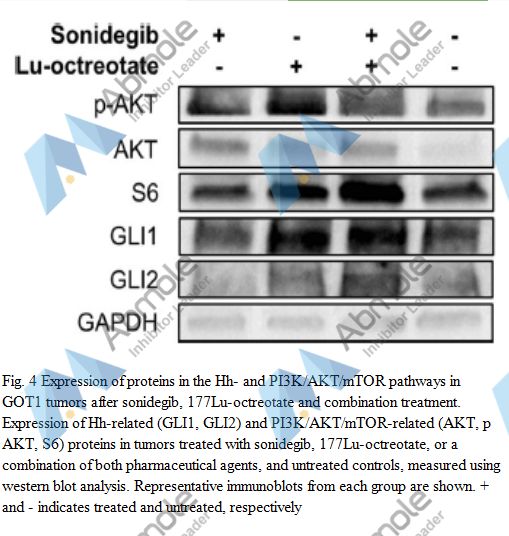 |
Source | Sci Rep (2016). Figure 2. 666-15 |
| Method | The luciferase activity assay | |
| Cell Lines | HEK 293T cells | |
| Concentrations | 5.0 μM | |
| Incubation Time | 5–7 h | |
| Results | Together with previous results of 666-15’s effect on other transcription factors22, these data demonstrate that 666-15 had little or no effect on MLL, c-Myb, YAP/TEAD or p53 driven transcription, and only affected NF-κB and SRF driven transcription at concentrations ~100 fold higher than those required for CREB driven transcription. |
| Cell Experiment | |
|---|---|
| Cell lines | MDA-MB-231 and MDA-MB-468 cells |
| Preparation method | Cells are plated into 96-well plates and the cells are allowed to attach to the bottom of the plates overnight. Then the cells are treated with different concentrations of different drugs (666-15) for 72 h. The media are removed, and MTT reagent in complete tissue culture media is added to each well and incubated at 37 °C for 3 h. The incubation media are removed and 100 μL of DMSO is added to each well. The absorbance of the formed purple formazan solution is read at 570 nm using a plate reader. |
| Concentrations | 80 nM |
| Incubation time | 72 h. |
| Animal Experiment | |
|---|---|
| Animal models | BALB/c nude mouse |
| Formulation | 1% N-methylpyrrolidone (NMP), 5% Tween-80 in water |
| Dosages | 10 mg/kg |
| Administration | i.v. |
| Molecular Weight | 620.52 |
| Formula | C33H31Cl2N3O5 |
| CAS Number | 1433286-70-4 |
| Solubility (25°C) | 30 mg/mL in DMSO |
| Storage |
Powder -20°C 3 years ; 4°C 2 years In solvent -80°C 6 months ; -20°C 1 month |
| Related Epigenetic Reader Domain Products |
|---|
| RVX-208
Apabetalone (RVX-208) is a first-in-class, small molecule inhibitor of BET bromodomain with IC50 of 0.51 μM for BD2. |
| I-BET151
I-BET151 (GSK1210151A) is an inhibitor of the BET family with IC50 of 0.5 μM, 0.25 μM and 0.79 μM for BRD2, BRD3 and BRD4, respectively. |
| (+)-JQ1
(+)-JQ1 is a BET bromodomain inhibitor that acts on BRD4(2) with an IC50 of 33 nM and binds to all bromodomain domains in the BET family, but not to bromodomain domains outside the BET family. JQ1 down-regulates CD47 expression through a C-MYC-mediated pathway, and JQ1 down-regulates CD47 expression through a C-MYC-mediated pathway. |
| I-BET-762
I-BET-762 (GSK525762) is a selective small molecule BET inhibitor. |
| CPI-0610
CPI-0610 is a novel BET protein bromodomain inhibitor. |
All AbMole products are for research use only, cannot be used for human consumption or veterinary use. We do not provide products or services to individuals. Please comply with the intended use and do not use AbMole products for any other purpose.


Products are for research use only. Not for human use. We do not sell to patients.
© Copyright 2010-2026 AbMole BioScience. All Rights Reserved.
