
All AbMole products are for research use only, cannot be used for human consumption.
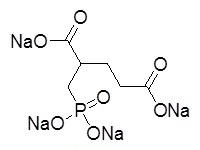
In vitro: 2-PMPA (PMPA tetrasodium salt) is a potent and selective inhibitor of GCPII, an enzyme which catabolizes the abundant neuropeptide N-acetyl-aspartyl-glutamate (NAAG) to N-acetylaspartate (NAA) and glutamate. 2-PMPA demonstrates robust efficacy in numerous animal models of neurological disease. 2-PMPA is a highly polar compound with multiple negative charges causing significant challenges for analysis in biological matrices.
In vivo: Intraperitoneal administration of 100 mg/kg 2-PMPA results in maximum concentration in plasma of 275 μg/mL at 0.25 h. The half-life, area under the curve, apparent clearance, and volume of distribution are 0.64 h, 210 μg×h/mL, 7.93 mL/min/kg, and 0.44 L/kg, respectively. 2-PMPA at 250 mg/kg, in an anesthetized mouse, after an initial rise, produces a rapid decline and a striking attenuation in BOLD signals in gray matter. The signature of 2-PMPA on brain T2* signals in gray matter at both 167 and 250 mg/kg includes a significant initial rise lasting several minutes.
CAS#: 173039-10-6(free base)

Front Cell Dev Biol. 2021 Mar 4;9:598377.
Prostate-Specific Membrane Antigen (PSMA) Promotes Angiogenesis of Glioblastoma Through Interacting With ITGB4 and Regulating NF-κB Signaling Pathway
2-PMPA tetrasodium purchased from AbMole
 |
Source | Front Cell Dev Biol (2021 Mar). Figure 3. 2-PMPA (Abmole Bioscience, USA) |
| Method | Cell Culture | |
| Cell Lines | HUVECs, U87 and U251 cell lines | |
| Concentrations | 100 µM | |
| Incubation Time | 24 h | |
| Results | Meanwhile, the treatment of PSMA inhibitor 2-PMPA could effectively eliminate PSMA expression in all groups |
| Cell Experiment | |
|---|---|
| Cell lines | Neuronal cultures |
| Preparation method | 2-PMPA is selected to explore the protective effect on ketamine-induced neurotoxicity in these two different cell cultures. Cells are exposed to 2-PMPA (20, 50, 100 μM) half an hour before 10 μM ketamine treatment in neuronal cultures and 2 mM ketamine treatment in neuron–glia mixed cultures for 24 h. Different doses of ketamine chosen in neuronal cultures and neuron–glia mixed cultures are based on the results of cell viability tests. |
| Concentrations | 20, 50, 100 μM |
| Incubation time | 24 h |
| Animal Experiment | |
|---|---|
| Animal models | Male Wistar rats |
| Formulation | 50 mM HEPES buffered saline |
| Dosages | 80 mg/kg |
| Administration | i.p. |
| Molecular Weight | 314.05 |
| Formula | C6H7Na4O7P |
| CAS Number | 373645-42-2 |
| Solubility (25°C) | Water ≥ 10 mg/mL |
| Storage | 4°C, dry, sealed |
| Related Products |
|---|
| Lactate calcium
Lactate calcium is an excellent calcium fortifier that works better than inorganic calcium. Lactate calcium is used as an antacid. |
| Coniferyl ferulate
Coniferyl ferulate is a potent glutathione S-transferase (GST) inhibitor that reverses multidrug resistance and down-regulates p-glycoprotein. Coniferyl ferulate strongly inhibited human placental glutathione S-transferase with IC50 of 0.3 μM. |
| NXY-059
NXY-059 is a free radical-trapping neuroprotectant that has been reported to reduce infarct size and preserve brain function in experimental models of acute ischemic stroke. |
| Tie2 kinase inhibitor
Tie2 kinase inhibitor is a potent, reversible, and ATP-binding site-targeting Tie2 inhibitor with an IC50 of 250 nM. |
| Calcium levofolinate
Calcium levofolinate is a calcium salt of folinic acid that is an adjuvant used in cancer chemotherapy. |
All AbMole products are for research use only, cannot be used for human consumption or veterinary use. We do not provide products or services to individuals. Please comply with the intended use and do not use AbMole products for any other purpose.


Products are for research use only. Not for human use. We do not sell to patients.
© Copyright 2010-2026 AbMole BioScience. All Rights Reserved.
